The Art of Seamless Flap Transitions

Ask a group of glider pilots about flap settings, and you’ll get a wide range of answers: numbers, rules of thumb, even “seat-of-the-pants” instincts. All are valid to a certain degree, but the real skill lies not in memorising positions, but in understanding the why and how we move between them.
Think of flaps less as fixed settings and more as a continuous control of wing shape. In slow, rising air, increasing camber (positive flap) allows the wing to generate more lift at lower speeds, tightening your turn and improving climb.
Out on glide, especially at higher speeds, reducing camber (negative flap) cleans up the wing and reduces drag. That part is well known. What’s less discussed is the transition in between, and that’s where many pilots leave performance behind.
Watch closely in some cockpits, and you’ll see flap changes made abruptly: a quick “clunk” from +2 to 0, or 0 to -2. It’s decisive, but not necessarily efficient. Each sudden movement changes the wing’s lift and drag characteristics instantly, often causing a small pitch change and a brief loss of energy. Multiply that over a long flight, and the cost adds up. I was once told by a French team member that if you find yourself in the wrong flap setting, don't change it immediately unless you intend to spend more than 30 seconds in that setting. Each flap change will cost you height!
A better approach is to treat flap movement like you would the stick - smooth, deliberate, and coordinated. As you leave a thermal and lower the nose to accelerate, be earlier on your change to negative, but be smooth. The glider will feel more settled, and your acceleration will be cleaner. The same applies in reverse: when slowing down for lift, it's better to be later on setting the positing flap, leaning on the flap ever so slightly at the end, which keeps the wing optimised throughout the transition
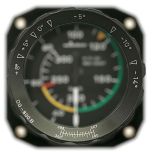
Modern tools can help, like the Grosskinsky Flap Ring, which can provide an intuitive visual cue for flap selection based on speed, while systems such as the LXNAV Flap Sensor give precise, real-time feedback integrated into your instruments. These aids don’t replace judgment, but they do encourage consistency, and consistency is king!
In the end, good flap management isn’t about chasing perfect numbers. It’s about flow: matching your configuration seamlessly to the phase of flight of which you are in. When done well, it’s almost unnoticeable, but the results show up clearly in your performance, super satisfying too!
Safe cruising,
WPP
Banner photo by Sean Franke
 Adam Woolley was born into the gliding world, being the 3rd generation in his family. Going solo at 15, his thirst for efficiency in soaring flight & quest for a world championship title to his name has never wavered. One big passion is sharing his experiences & joy with other glider pilots all around the world. Adam is an airline pilot in Japan on the B767 & spends his off time chasing summer around the globe. He has now won 7 national Championships & represented Australia at 5 WGC's & 1 EGC.