
Soaring Overload

Soaring Overload
Overload can affect any pilot, at any experience level.
A new student might feel overwhelmed simply trying to fly straight while scanning the instrument panel of a Schweizer SGS 2-33. At the other end of the spectrum, a 10,000-hour pilot can still find themselves deep in unfamiliar mountain terrain, in a new glider, asking: How did I get here?
The common thread is not experience—it’s capacity. When task saturation exceeds what you can process, mistakes follow.
Spring Has Arrived
At the start of the season, assume you are rusty.
You are not as current, not as quick, and not as sharp as when you last put the glider away. That’s normal—but it needs to be respected.
I recently worked with a licensed pilot who primarily flies in the summer. It took two full weekends just to get him comfortable enough to solo again—and even then, he acknowledged it would take another month to return to his normal proficiency.
I also know of two gliders already headed to the shop after damage on the very first weekend of the season.
Early-season flying demands margin. Build it in deliberately.
Know Your Abilities
As you progress, especially into instruction, this becomes even more important.
You may watch another instructor allow a student to drift further out of position than you’re comfortable with. There are two possibilities:
- They have a better feel for that student’s capabilities
- They are becoming complacent
Both exist.
When in doubt, ask. After the flight, have a direct conversation: What was your plan? When were you going to take over? These discussions sharpen judgment far more than silent observation.
Don’t Follow the Crowd
In competitive environments, this becomes critical.
During a final glide at the Junior World Gliding Championships, I was with a group all pushing for home. No one wanted to be the first to break off. Everyone was watching everyone else.
I diverted toward clouds off course and landed in a field.
Others pressed on—and some crossed the finish under powerlines because they didn’t have the energy to clear them.
Groupthink is subtle, and dangerous. Make your own decisions.
Ask Questions
If you’re flying somewhere like Mifflin County Airport during a ridge event, take advantage of local knowledge.
Ask pilots about their decision-making:
- What was your plan along that ridge?
- Where were your outs?
You’ll hear everything from: “Yeah, that was dumb” to “There’s a field just around that corner.”
Last year, Mike and I ended up running the engine because we didn’t know about a viable alternate field another competitor used successfully. We assumed he was taking a bad risk—he wasn’t. We just lacked the information.
Final Thought
Stay within your abilities—and be honest about where those limits are today, not where they were last season.
Build margin. Ask questions. Make independent decisions.
That’s how you stay safe—and keep flying.
Banner Photo Credit Maciej Gębacz - Heimdall Fotografia
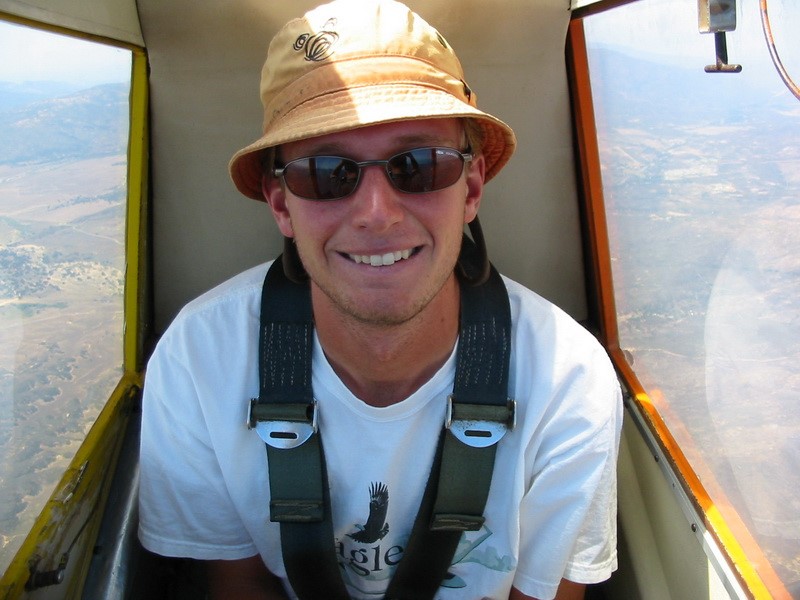 Garret Willat holds a flight instructor rating with over 8000 hours in sailplanes. His parents have owned Sky Sailing Inc. since 1979. He started instructing the day after his 18th birthday. Since then, Garret has represented the US Junior team in 2003 and 2005. He graduated from Embry-Riddle with a bachelor's degree in Professional Aeronautics. Garret represented the US Open Class team in 2008 and 2010 and the Club Class team in 2014. Garret has won 3 US National Championships.

